How I Found My Balance: A Real Talk on Why This Workout Actually Works
You know that wobble when you tie your shoe on one foot? Or nearly trip going downstairs? Yeah, me too—until I started taking balance training seriously. It’s not just for older adults or athletes; it’s for anyone who wants to move better every day. I tried it, tested it, and saw real changes. This isn’t about flashy moves or instant miracles—it’s simple, science-backed, and surprisingly effective. Let’s talk about how something so quiet can make such a big difference in how your body feels and functions.
The Hidden Struggle: Why We All Lose Balance (Without Noticing)
Most people don’t realize how much they’ve lost their natural balance until they’re reminded by a near-miss on the stairs or a stumble on uneven ground. These small moments happen more often than we admit, especially as we move through our daily routines with little attention to how we stand, turn, or shift weight. The truth is, balance isn’t just something you either have or don’t—it’s a skill that weakens when unused, and modern life isn’t helping. Long hours spent sitting, walking on flat surfaces, and wearing supportive shoes all reduce the subtle challenges our bodies once faced regularly. Without varied terrain, unpredictable movements, or the need to stabilize ourselves, our proprioception—the body’s ability to sense its position in space—begins to dull.
Balance relies on constant communication between the brain, inner ear, muscles, joints, and eyes. When this system isn’t challenged, it becomes less responsive. Think about how children run, jump, and climb with fearless coordination—they’re constantly testing their limits, refining their control. As adults, we often avoid those movements, trading agility for comfort. Over time, this leads to subtle but significant changes: standing with feet farther apart, holding onto railings more tightly, or needing to touch a wall when bending over. These aren’t just habits—they’re signs that the body is compensating for declining stability.
Even simple actions like stepping off a curb, turning quickly in a grocery aisle, or standing on a moving bus require dynamic balance. When the body isn’t prepared, it reacts slowly, increasing the risk of missteps or falls. And while serious injuries might seem rare, minor instability can lead to joint strain, poor posture, and decreased confidence in movement. The good news? This decline isn’t inevitable. With awareness and consistent practice, balance can be improved at any age. The first step is recognizing that the struggle is real—even if it’s been invisible until now.
Beyond the Gym: Why Balance Training Matters More Than You Think
Beyond aesthetics or performance, balance training supports long-term health in ways that go unnoticed until they’re missing. It’s not just about preventing falls—it’s about maintaining independence, mobility, and confidence as we age. Strong balance means better control over your body, which translates to safer movement in everyday situations. Carrying heavy grocery bags up a flight of stairs, playing with grandchildren on the playground, or walking on a rocky hiking trail—all of these activities become easier and safer with improved stability. The benefits extend beyond physical function; they touch emotional well-being too. When you feel steady on your feet, you move through the world with more assurance, less hesitation, and greater freedom.
Balance also plays a crucial role in injury prevention. Weak stability often leads to poor alignment, which increases stress on joints like the knees, hips, and lower back. For example, if your ankle can’t stabilize properly during a step, your knee may twist slightly, creating wear over time. Similarly, poor core control can lead to slouching or uneven weight distribution, contributing to chronic discomfort. By training balance, you strengthen the small stabilizing muscles that support major joints, improving overall alignment and reducing the risk of strain. This is especially important for those who spend long hours at a desk or engage in repetitive movements that favor one side of the body.
Athletes and active individuals benefit just as much. Runners rely on single-leg stability with every stride. Cyclists need core engagement to maintain posture over long rides. Weightlifters require balance to perform squats, lunges, and overhead lifts safely. Even low-impact activities like yoga or swimming involve coordination between movement and control. Incorporating balance work enhances performance across all forms of exercise by sharpening neuromuscular coordination. Over time, this leads to smoother, more efficient movement patterns and faster recovery from physical demands. The result is not just stronger muscles, but a more integrated, responsive body.
Myth Busting: What Balance Training Is (and Isn’t)
Many people assume balance training means standing on one leg or using a wobble board, but it’s far more comprehensive than that. While single-leg stands are a great starting point, true balance training involves a variety of movements that challenge stability in different ways. It’s not just about holding still—it’s about moving with control, adapting to changes, and responding to unexpected shifts. There are three main types of balance: static, dynamic, and reactive. Static balance refers to maintaining position while stationary, like standing on one foot. Dynamic balance involves movement, such as walking heel-to-toe or stepping over an object. Reactive balance is the body’s ability to recover when stability is suddenly disrupted, like catching yourself after slipping on a wet floor.
Another common misconception is that only older adults or those with mobility issues need balance work. In reality, everyone can benefit—regardless of age or fitness level. Even young, active individuals can have gaps in stability, especially if their routines focus on strength or endurance without incorporating coordination. Balance training isn’t a sign of weakness; it’s a sign of smart, holistic fitness. It’s not about fixing something broken, but about building resilience and preventing future problems. The goal isn’t to achieve perfect stillness, but to improve the body’s ability to respond, adapt, and recover.
Some also believe that balance training requires special equipment or complex routines. While tools like foam pads, balance discs, or stability balls can add variety, they’re not necessary to get results. Simple, bodyweight-based exercises done consistently are highly effective. What matters most is intention and consistency, not complexity. Progress comes from mindful practice—paying attention to how your body feels, making small adjustments, and gradually increasing challenge over time. It’s not a quick fix, but a sustainable habit that pays off in long-term mobility and confidence.
The Science Behind the Stability: How Your Body Responds
Balanced movement relies on a sophisticated network of systems working together: the vestibular system in the inner ear, the visual system, and the somatosensory system, which includes feedback from muscles, joints, and skin. The vestibular system detects head motion and spatial orientation, helping you know which way is up. The eyes provide visual cues about your environment, while the somatosensory system sends information about pressure, texture, and limb position. When these three systems communicate effectively, your brain creates a clear picture of where your body is and how it’s moving. But when one system is impaired—like poor vision in dim light or numbness in the feet—your balance can suffer, even if the other systems are strong.
The good news is that this system is adaptable. Thanks to neuroplasticity—the brain’s ability to reorganize and form new neural connections—balance can be improved with practice. When you challenge your stability, your brain learns to process sensory input more efficiently and coordinate muscle responses faster. Over time, this leads to smoother, more automatic reactions. For example, someone who regularly practices balance exercises may not even notice how quickly they adjust when stepping off a curb, while someone untrained might wobble or need to grab support. These improvements aren’t just perceptual—they’re measurable. Studies have shown that consistent balance training increases muscle activation in stabilizing muscles around the ankles, knees, and core, leading to better joint control and reduced injury risk.
Think of your balance system like an internal compass. When it’s well-calibrated, you move with precision and ease. When it’s neglected, it becomes less accurate, leading to hesitation and instability. Regular training fine-tunes this compass, sharpening your body’s awareness and response time. You don’t need to become an expert athlete to benefit—just engaging in simple, mindful exercises a few times a week can make a noticeable difference. The key is repetition and variety. By introducing different surfaces, stances, and movements, you give your brain and body a broader range of experiences to learn from, building a more resilient and adaptable system.
Simple Moves That Actually Work: A Starter Toolkit
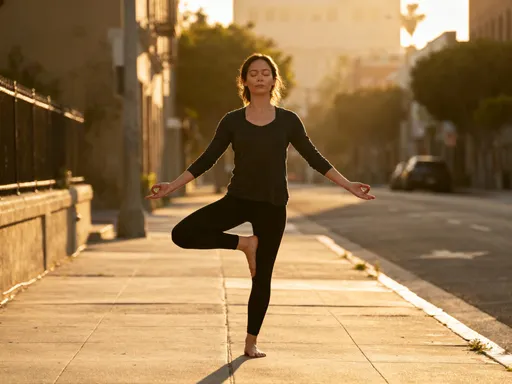
Getting started with balance training doesn’t require a gym membership or special equipment. Five basic exercises can form the foundation of an effective routine, offering measurable improvements with just a few minutes a day. The first is the single-leg stand. Stand on one foot, keeping the other slightly off the ground. Focus on a fixed point ahead and engage your core. Hold for 20–30 seconds, then switch sides. To increase difficulty, try closing your eyes or standing on a soft surface like a folded towel. This variation challenges your body’s reliance on visual cues and enhances somatosensory feedback.
Next is the heel-to-toe walk, also known as the tandem walk. Walk in a straight line, placing one foot directly in front of the other so that the heel of the forward foot touches the toes of the back foot. Take 10–15 steps with control, keeping your arms out to the sides for support if needed. This exercise improves dynamic balance and coordination, mimicking the narrow-base movements required in real-life situations like walking on a sidewalk curb.
The weight shift is another effective drill. Stand with feet hip-width apart and slowly shift your weight from side to side, lifting one heel at a time while keeping the toes on the ground. Then, shift forward and back, lifting the toes while keeping the heels down. This movement enhances ankle mobility and teaches the body to adjust its center of gravity smoothly. It’s especially helpful for those who feel unsteady when changing directions.
Standing marches involve lifting one knee at a time to hip height while maintaining an upright posture. Hold each lift for a second before lowering the leg. This engages the core and hip flexors while challenging single-leg stability. For added difficulty, try marching in place with your eyes closed or on an uneven surface.
Finally, mini squats with control build strength and balance simultaneously. Perform small, slow squats, focusing on keeping your weight in your heels and your knees aligned over your toes. Rise and lower with control, avoiding any forward lean or wobble. This movement strengthens the muscles that support balance while reinforcing proper alignment. Aim to do these exercises daily, starting with 5–10 minutes and gradually increasing as your confidence grows. The goal isn’t speed or intensity, but mindfulness and consistency.
Leveling Up: Adding Challenge Without Risk
Once the basics feel comfortable, it’s time to introduce more advanced variations—carefully and safely. One effective progression is the single-leg reach. Stand on one leg and slowly reach the opposite foot forward, to the side, or behind you, returning to center each time. This challenges both balance and coordination while strengthening stabilizing muscles. Another option is step-overs: place a low object like a book or yoga block on the floor and step over it slowly, lifting the knee high and landing softly. Alternate legs and focus on control rather than speed.
Using unstable surfaces can also increase difficulty. A foam pad, folded blanket, or balance disc adds sensory challenge by reducing predictable feedback from the ground. Try performing single-leg stands or mini squats on these surfaces to further sharpen your body’s response. However, always ensure you’re near a wall or sturdy furniture for support, especially when trying new variations. Safety should never be compromised for difficulty.
Incorporating balance into daily activities is another smart strategy. Pause mid-walk to stand on one leg while waiting for the microwave. Do calf raises while brushing your teeth. Shift your weight from foot to foot while standing in line. These micro-practices add up over time, reinforcing balance without requiring extra time or effort. The key is to stay focused on control—moving slowly, breathing steadily, and paying attention to how your body feels. Complexity isn’t the goal; consistency and precision are.
It’s also important to avoid overcomplicating the routine. You don’t need a dozen exercises or fancy gadgets to see results. A few well-executed movements done regularly are far more effective than an elaborate but inconsistent program. Listen to your body—if you feel pain, dizziness, or excessive fatigue, stop and reassess. Progress should feel gradual and sustainable, not forced or uncomfortable. Balance training is a journey, not a race, and every small improvement counts.
Making It Stick: How to Build Balance Into Real Life
The biggest challenge with balance training isn’t the exercises—it’s consistency. Unlike high-intensity workouts that leave you sweaty and energized, balance work is quiet, subtle, and often goes unnoticed. That’s why it’s easy to skip. But the real power lies in regular, mindful practice. The best way to make it stick is to attach it to existing habits. Pair your balance routine with morning coffee prep, evening dishwashing, or commercial breaks during TV time. These small anchors help turn practice into habit without adding extra time to your day.
Using reminders can also help. Set a daily alert on your phone or leave a sticky note on the bathroom mirror. Tracking progress—even in simple ways—can boost motivation. Note how long you can hold a single-leg stand, whether you wobble less during heel-to-toe walks, or if you feel more confident on stairs. These small wins add up and reinforce the value of the practice.
Mindset matters too. Balance isn’t about perfection. Some days will feel easier than others, and that’s normal. The goal is awareness—learning to notice how your body moves, where you feel tension, and how small adjustments improve stability. Celebrate subtle improvements: standing taller, turning more smoothly, feeling lighter on your feet. These are signs of progress, even if they don’t come with dramatic results.
View balance as a lifelong skill, not a short-term fix. Just like brushing your teeth or eating vegetables, it’s a form of self-care that pays long-term dividends. And if you experience dizziness, pain, or persistent instability, consult a healthcare professional. A physical therapist or certified trainer can offer personalized guidance and ensure your routine is safe and effective. Balance training isn’t a trend—it’s a foundation for moving well, staying independent, and living with confidence at every age.
Balance training doesn’t shout for attention, but once you start, you feel it everywhere—walking, standing, even breathing. It’s not about perfection; it’s about awareness, resilience, and moving through life with more confidence. This quiet practice builds a foundation most of us didn’t know we were missing. And honestly? I wish I’d started years ago. But the good news is—it’s never too late to stand a little taller, steady on your feet, and own your movement.