Colorful Streets and Colonial Gems: A Real Look at San Juan’s Architecture
Walking through Old San Juan feels like stepping into a living postcard. The cobblestone streets, vibrant buildings, and centuries-old forts aren’t just pretty—they tell a rich story. I was stunned by how Spanish colonial design blends with Caribbean flair. Every balcony, tile, and doorway has character. This isn’t just sightseeing—it’s experiencing history through architecture. Let me show you why San Juan’s built environment is a must-see for any curious traveler.
First Impressions: Stepping into Old San Juan
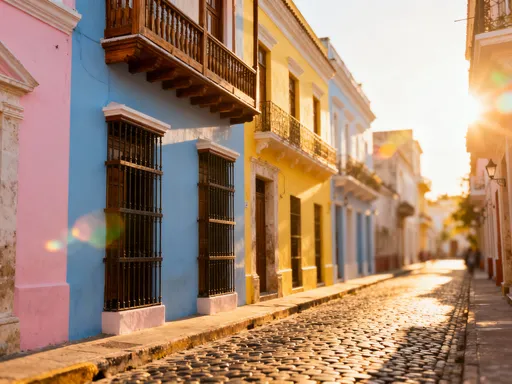
Entering Old San Juan is an experience that awakens the senses. As visitors pass through the iconic Puerta de San Juan, the 18th-century stone gateway that once guarded the city from seaborne threats, they are immediately immersed in a world where time seems to slow. The first thing that strikes most travelers is the kaleidoscope of color—walls painted in soft pinks, sunny yellows, sky blues, and mint greens, all glowing under the tropical sun. These hues are not random; they reflect a tradition of vibrant expression deeply rooted in Caribbean identity and colonial heritage.
Beneath the feet, the streets are paved with adoquines—blue cobblestones made from iron slag, a byproduct of ship ballast brought over from Europe during the colonial era. These stones have withstood centuries of foot traffic, horse-drawn carriages, and tropical rains, yet they remain a defining feature of the city’s charm. The irregular texture demands careful steps, especially in the afternoon heat, but it also connects modern visitors to the physical reality of life centuries ago. The layout of the city follows a grid pattern established in the 16th century, a hallmark of Spanish colonial urban planning designed for order, defense, and accessibility.
Scattered throughout the district are shaded plazas—open public spaces that serve as social and cultural hubs. Plaza de Armas, the oldest square in the city, sits at the heart of Old San Juan and has long been a gathering place for locals and dignitaries alike. Surrounded by historic buildings, including the former Spanish Governor’s residence, it offers a peaceful retreat from the bustle of narrow streets. Nearby, Plaza del Cristo and Plaza de San José provide benches beneath towering palm trees, where visitors can rest while absorbing the architectural rhythm of arched colonnades and ornate facades. These plazas were intentionally placed within the grid to promote community life and civic engagement, a principle that remains alive today.
Despite its historical aura, Old San Juan is far from a museum piece. Modern life pulses through its veins—cafes serve espresso to digital nomads, boutique shops display locally made crafts, and schoolchildren walk home past centuries-old walls. The contrast is not jarring but harmonious, a testament to how well-preserved heritage can coexist with contemporary living. Residents take pride in maintaining their homes’ authenticity while adapting them to present-day needs, striking a balance between preservation and practicality that few historic districts achieve so gracefully.
Spanish Colonial Roots: The Foundation of San Juan’s Style
The architectural soul of San Juan lies in its Spanish colonial foundations, a legacy that dates back to the early 1500s when the island became a strategic outpost in Spain’s expanding empire. The design principles brought from the Iberian Peninsula were adapted to the Caribbean climate and security concerns, resulting in a unique fusion that defines the city’s oldest structures. Thick masonry walls, often constructed from local limestone and imported materials, provided insulation against the intense heat and protection from hurricanes and attacks—a necessity in a region frequently threatened by both nature and rival powers.
One of the most enduring features of Spanish colonial homes is the central courtyard, or patio interior. This open-air space served as the heart of domestic life, allowing natural light and ventilation to penetrate deep into the house. Family meals, private conversations, and even religious observances often took place within this protected space, shielded from the public eye by high outer walls. The courtyard also played a functional role in water collection and temperature regulation, making it an ingenious solution to environmental challenges long before modern air conditioning or plumbing existed.
Windows and doors were carefully designed for both security and comfort. Wrought-iron grilles, known as rejas, adorned nearly every opening, offering ventilation while deterring intruders. Many of these intricate metalworks were hand-forged by skilled artisans and have been preserved or replicated in restoration efforts. Louvered wooden shutters allowed residents to control airflow and sunlight, closing tightly during storms or opening wide to catch sea breezes. These details were not merely decorative—they were practical responses to living in a hot, humid, and sometimes dangerous environment.
Among the most significant surviving examples of early colonial architecture is Casa Blanca, originally built in the 1520s as the residence of Juan Ponce de León’s family. Though modified over the centuries, the structure retains many original features, including thick walls, stone arches, and a central courtyard. Today, it operates as a museum, offering insight into domestic life during the earliest days of Spanish settlement. Similarly, the Cathedral of San Juan Bautista, constructed primarily in the 16th century, stands as one of the oldest cathedrals in the Americas. Its simple yet imposing façade and interior layout reflect the religious and political authority of the Catholic Church during the colonial period.
These buildings were not only homes and places of worship but also symbols of power and permanence. Their construction required immense labor and resources, often involving enslaved African and indigenous workers—an aspect of history that is increasingly acknowledged in official narratives. The endurance of these structures speaks to the craftsmanship of their builders and the resilience of the city itself, which has weathered wars, natural disasters, and economic shifts over five centuries.
Baroque, Neoclassical, and Military Influence
As San Juan evolved over the centuries, new architectural styles were introduced, reflecting changing tastes, political influences, and technological advances. Among the most striking additions were Baroque and Neoclassical elements, which began appearing in religious and civic buildings from the 17th century onward. The Baroque style, characterized by dramatic curves, ornate stucco work, and elaborate altarpieces, brought a sense of grandeur and emotional intensity to sacred spaces. This is particularly evident in the interior of the Cathedral of San Juan Bautista, where gilded woodwork and detailed religious iconography create a sense of awe and reverence.
Later, during the 18th and 19th centuries, Neoclassical architecture gained favor, especially in government and public buildings. Inspired by Greco-Roman ideals of symmetry, proportion, and order, this style conveyed stability and authority. Buildings such as the former Spanish Customs House and various administrative offices in Old San Juan feature clean lines, columned porticos, and restrained ornamentation—marking a shift from the emotional richness of Baroque toward rational elegance. These structures were often painted in white or light pastels, reinforcing their association with civic dignity and Enlightenment values.
Perhaps the most imposing architectural legacy in San Juan is its military infrastructure. The city’s strategic location made it a target for European powers, prompting the construction of massive fortifications that remain among the best-preserved in the Americas. Castillo San Felipe del Morro, commonly known as El Morro, was built over more than two centuries, beginning in the 1540s. Rising dramatically at the northwestern tip of the islet, its layered walls, bastions, and garitas (sentry boxes) were engineered to withstand cannon fire and repel invaders. The fort’s design followed advanced military engineering principles of the time, incorporating angled walls to deflect projectiles and extensive underground tunnels for troop movement and storage.
Similarly, Castillo San Cristóbal, located on the eastern side of Old San Juan, was constructed to defend against land-based attacks. Together, these forts formed a comprehensive defense system that protected the city and its harbor. Both were built using local materials combined with imported stone and brick, and their scale required decades of labor and planning. Today, they are part of the San Juan National Historic Site, managed by the National Park Service, and attract hundreds of thousands of visitors each year.
The preservation of these landmarks owes much to their designation as a UNESCO World Heritage Site in 1983. This recognition helped secure funding and international attention for ongoing restoration and conservation efforts. Teams of architects, historians, and craftspeople work meticulously to repair stonework, restore original paint colors, and maintain structural integrity using traditional methods whenever possible. These efforts ensure that future generations can continue to experience the authenticity and grandeur of San Juan’s architectural heritage.
The Caribbean Touch: How Culture Colors Design
While European influences form the foundation of San Juan’s architecture, it is the Caribbean spirit that gives it life and color. Over time, local residents transformed imported styles into something uniquely their own, adapting designs to suit the climate, culture, and creative sensibilities of the island. Nowhere is this more evident than in the residential streets of Old San Juan, where every building tells a story through its palette, craftsmanship, and personal touches.
The vibrant paint colors that define the city’s streetscapes are more than just aesthetic choices—they carry cultural meaning. In the past, families often selected hues based on availability, but over time, certain colors became associated with identity, mood, and even social status. Today, restoration guidelines encourage the use of historically accurate pigments, but homeowners still enjoy creative freedom within those boundaries. A bright turquoise door might signal hospitality, while a deep coral wall could reflect warmth and energy. These colors, set against white trim and ironwork, create a visual rhythm that delights the eye and lifts the spirit.
Wooden balconies are another hallmark of Caribbean adaptation. Extending from upper floors, they provide shaded outdoor space for relaxation, conversation, and enjoying the breeze. Many are intricately carved, with floral or geometric patterns that reflect both European craftsmanship and local artistry. Some balconies are enclosed with glass or screens, turning them into semi-indoor rooms during rainy seasons, while others remain open, inviting interaction with neighbors and passersby. This emphasis on outdoor living reflects a cultural value placed on community and connection to nature.
Decorative tiles, often seen around doorways, staircases, and courtyards, add another layer of artistry. Known as azulejos, these ceramic tiles were originally imported from Spain but are now sometimes produced locally. They feature geometric patterns, floral motifs, or religious symbols, and their cool surfaces help regulate indoor temperatures. In some homes, entire walls are covered in tile, creating a mosaic effect that transforms functional spaces into works of art.
These personal expressions of design reveal how architecture is not just about form and function, but about identity and belonging. The way a homeowner paints a door, arranges potted plants on a balcony, or chooses window grilles reflects generations of tradition and individual pride. Walking through these neighborhoods, one gets the sense that history is not frozen—it is lived, celebrated, and renewed with each careful renovation and daily act of care.
Beyond Old San Juan: Modern and Adaptive Architecture
While Old San Juan captures much of the spotlight, the architectural story of the city extends well beyond its ancient walls. Neighborhoods like Condado, Miramar, and Santurce showcase different eras of development, offering a broader perspective on how San Juan has grown and adapted over time. In Condado, for example, early 20th-century beachfront hotels and private residences reflect American-influenced tropical modernism, with wide verandas, stucco exteriors, and ocean-facing orientations designed to maximize views and ventilation.
Miramar, once a residential enclave for the elite, features a mix of early 1900s mansions and mid-century homes that blend Art Deco, Mission Revival, and International Style elements. These neighborhoods demonstrate how architectural trends from the mainland United States merged with local conditions to create a distinctive regional character. Though less tourist-centric than Old San Juan, they offer quiet streets lined with mature trees, historic homes, and a sense of everyday elegance.
One of the most encouraging trends in recent years has been the adaptive reuse of older buildings. Across the city, vacant or underused structures are being transformed into boutique hotels, art galleries, cultural centers, and cafes. A former schoolhouse might become a community arts space, while an old bank building could house a modern restaurant with preserved vaults and marble floors. These projects honor the past while serving contemporary needs, demonstrating that preservation does not mean stagnation.
Sustainable preservation practices are increasingly emphasized, with efforts to use eco-friendly materials, improve energy efficiency, and reduce environmental impact during renovations. Solar panels are discreetly installed on rooftops, rainwater collection systems are integrated into historic courtyards, and native plants are used in landscaping to support biodiversity. These measures ensure that the city’s architectural legacy can endure in an era of climate change and urban growth.
This evolution shows that San Juan is not trapped in the past, but rather engaged in an ongoing dialogue between heritage and innovation. The city’s ability to honor its roots while embracing change is a model for urban development in historic regions worldwide.
Practical Tips for Exploring San Juan’s Architectural Gems
To fully appreciate San Juan’s architectural richness, thoughtful planning enhances the experience. The best times to explore Old San Juan are early morning or late afternoon, when sunlight casts a golden glow on the colorful facades and temperatures are more comfortable for walking. Midday heat can be intense, so carrying water, wearing a hat, and choosing breathable clothing are wise precautions. Comfortable footwear is essential—adoquin streets are uneven and can be slippery when wet, so closed-toe shoes with good grip are recommended.
For first-time visitors, a guided walking tour offers valuable context. Licensed local guides share stories about construction techniques, historical events, and cultural traditions that bring the buildings to life. Many tours focus on specific themes, such as religious architecture, military history, or residential design, allowing travelers to dive deeper into areas of interest. For those who prefer independence, self-guided walks using official maps or mobile apps can be equally rewarding, especially when combined with stops at plazas and viewpoints to rest and reflect.
Respecting private property is crucial. While many buildings are visually accessible from the street, some are private homes or businesses. Visitors should avoid touching walls or entering courtyards without permission and be mindful of photography etiquette—especially when people are present. The goal is to observe with appreciation, not intrusion.
Along the way, small cafes and kiosks offer refreshments with charm. A stop at a corner café for a café con leche or a glass of fresh coconut water provides not only a break but also a chance to observe daily life in the district. Some restaurants feature outdoor seating with views of historic landmarks, allowing diners to savor both food and scenery. These moments of pause enrich the journey, turning a simple walk into a layered experience of culture, history, and sensory delight.
Why Architecture Matters: Connecting with Place Through Design
Architecture is more than bricks and mortar—it is memory made visible. In San Juan, every building, street, and plaza carries the imprint of those who came before, offering a tangible connection to the past. When we take the time to look closely—at the curve of a balcony, the texture of a stone wall, or the pattern of a tile floor—we engage in an act of understanding that transcends language and time. We begin to see not just what a place looks like, but what it has lived through, what it values, and how it has adapted.
For travelers, especially those seeking meaningful experiences, architecture offers a pathway to deeper connection. It invites us to slow down, to notice details, and to appreciate the craftsmanship and intention behind human environments. Unlike fleeting moments or superficial attractions, buildings endure, bearing witness to centuries of change. They remind us that cities are not static backdrops but living entities shaped by history, culture, and resilience.
Appreciating San Juan’s architecture is not about memorizing dates or styles, but about cultivating curiosity and respect. It is about recognizing that every color, material, and layout has a reason—and a story. When we walk through its streets with this awareness, we do more than visit a destination; we participate in its ongoing life.
So as you plan your next journey, consider looking beyond the surface. Let the buildings guide you. Ask not only where you are going, but how that place was built, who built it, and why it looks the way it does. In doing so, you transform travel from mere movement into meaningful discovery. San Juan, with its colorful streets and colonial gems, invites you to see the world—and yourself—through the quiet wisdom of architecture.