Through the Lens of Tradition: Chasing Light and Soul in Hallstatt
Have you ever stood somewhere so breathtaking it made your hands tremble on the camera? That’s Hallstatt. Nestled between misty Alps and a mirror-like lake, this Austrian gem isn’t just a postcard—it’s a living canvas of culture and light. I went to photograph the scenery, but ended up capturing centuries of stories in every frame. From wooden balconies draped in flowers to silent church spires at dawn, Hallstatt teaches you to see deeper. This is travel photography as cultural connection.
First Light Over Hallstatt: A Photographer’s Dream Come True
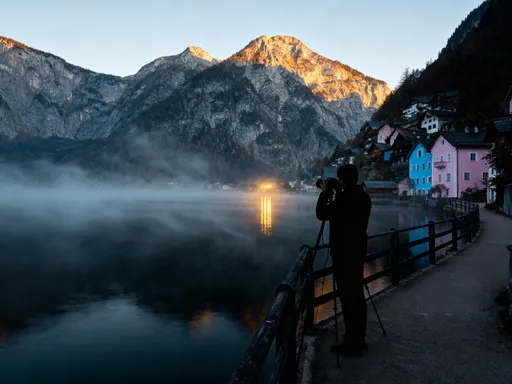
There is a moment in Hallstatt, just before the sun clears the eastern peaks, when the village seems to hold its breath. The sky shifts from indigo to soft peach, and the first golden rays spill across Lake Hallstatt, turning its surface into liquid light. Mist curls gently above the water, weaving between houseboats and the stone steps that descend into the shallows. This is the golden hour in one of Europe’s most photogenic villages—a fleeting window of perfect illumination that transforms ordinary scenes into visual poetry.
For photographers, sunrise in Hallstatt is not merely beautiful—it is essential. The low angle of the morning sun casts long, sculptural shadows and enhances textures in the centuries-old architecture. Wooden facades glow with warmth, while slate roofs absorb and reflect light in subtle gradations. The interplay of light and reflection across the lake creates natural symmetry, a compositional gift that few destinations offer so consistently. Standing along the lakeside promenade during these early hours, one understands why Hallstatt appears on so many travel calendars and photography portfolios.
The Market Square, quieter now than in daylight, becomes a stage for quiet observation. A single baker opens his shop, steam puffing from the oven behind him. A cat stretches across a wet cobblestone. These small movements are amplified by the stillness, making them ideal subjects for storytelling images. A telephoto lens can isolate such moments, while a wide-angle captures the grand sweep of landscape and village merging into one seamless composition.
To make the most of this magical time, preparation is key. Arriving at least thirty minutes before sunrise allows time to scout positions and set up equipment without rushing. A lightweight tripod ensures sharp long exposures, especially when capturing the soft blur of drifting mist or the glassy reflection of the church spire in calm water. Using a polarizing filter reduces glare on the lake’s surface, revealing more detail beneath. Shooting in RAW format preserves the full dynamic range, which is crucial when balancing bright highlights and deep shadows in a single frame.
One of the most iconic vantage points is the small footbridge near the Protestant Church, where the view down the lake aligns perfectly with the towering Dachstein Mountains in the distance. From here, the composition layers water, village rooftops, and alpine peaks in harmonious progression. Another favored spot is the eastern end of the promenade, where the curve of the shoreline creates natural leading lines toward the heart of the village. Both locations are accessible without hiking, making them ideal for travelers of all mobility levels.
While the visuals are undeniably powerful, it is the atmosphere that elevates the experience. There is a reverence in the air, a sense that one is witnessing something timeless. The quiet hum of a distant motorboat, the soft lap of water against stone—these subtle sounds deepen the sense of immersion. Photography at this hour is not just about capturing what the eye sees, but about recording the feeling of being present in a place where nature and heritage coexist in delicate balance.
Beyond the Postcard: Discovering Authentic Daily Life
Every morning, long before the first tourist boat docks, Frau Huber arranges baskets of rye and pretzel bread outside her family-run bakery. The scent of yeast and caraway fills the narrow street. She nods to neighbors passing with grocery bags, exchanges a few words in German, and wipes flour from her apron. To many visitors, this is background scenery. To a photographer seeking authenticity, it is the soul of Hallstatt.
Most travelers arrive with a mental checklist: the bone house, the church tower, the panoramic view from the funicular. These landmarks are undeniably beautiful, but they represent only one layer of the village’s identity. Behind the postcard-perfect façades lies a living community—shopkeepers, boat captains, gardeners, and artisans—whose daily rhythms have changed little over generations. Capturing these moments requires shifting focus from monuments to people, from spectacle to subtlety.
A fisherman mending his net by the dock, his hands moving with practiced ease, tells a story of continuity. A carpenter restoring a painted window frame uses techniques passed down through apprenticeships. These are not staged performances for tourists; they are quiet acts of stewardship, preserving both buildings and traditions. Photographing them ethically means approaching with respect, asking permission when possible, and avoiding intrusive close-ups that might feel exploitative.
Candid photography in a small village demands sensitivity. Hallstatt’s population is fewer than 800, and many residents know one another by name. A sudden burst of shutter clicks or a lens pointed uninvited can feel like intrusion. The best approach is patience—waiting, observing, and allowing trust to build naturally. A smile, a polite greeting in basic German, or a simple “Darf ich ein Foto machen?” (“May I take a photo?”) can open doors more effectively than expensive gear.
When permission is granted, the resulting images carry emotional weight. A portrait of an elderly woman watering geraniums from her balcony becomes more than a pretty scene—it becomes a testament to care, continuity, and belonging. The way sunlight catches the silver in her hair, the weathered wood of the planter box, the vibrant red blooms against the gray stone wall—all these details form a narrative richer than any landscape alone could convey.
These everyday moments also reflect broader cultural values. Alpine communities have long emphasized self-reliance, craftsmanship, and harmony with nature. In Hallstatt, these principles are visible in the way homes are maintained, gardens cultivated, and public spaces kept immaculate. Photographers who take time to understand this context create work that transcends aesthetics, offering viewers a window into a way of life shaped by centuries of tradition.
Moreover, such images serve as quiet resistance to the flattening effect of mass tourism. When shared thoughtfully, they remind audiences that Hallstatt is not just a backdrop for selfies, but a home. They encourage travelers to slow down, to see beyond the checklist, and to recognize the human presence that gives the village its enduring character.
The Hidden Corners Only Slow Travelers See
Just steps from the main promenade, a narrow alley slopes upward between two stone buildings. Ivy climbs the walls, and the air is cooler here, shaded by overhanging eaves. At the top, a wooden gate opens into a private garden where a family grows herbs and roses. A weathered bench sits beneath an apple tree, its seat worn smooth by time. Few tourists find this place. It is not marked on maps, not featured in guidebooks. And yet, it may be one of Hallstatt’s most photographically compelling spots.
These hidden corners exist throughout the village—quiet docks used only by residents, forgotten staircases leading to upper lanes, small courtyards where laundry flutters in the breeze. They are not grand or dramatic, but they possess a quiet authenticity that resonates deeply in photographs. Unlike the crowded viewpoints, these spaces offer intimacy, allowing the photographer to compose without distraction and to engage with the environment on a personal level.
Discovering them requires a shift in pace. Fast tourism—rushing from landmark to landmark, checking off sights—misses these details entirely. Slow travel, by contrast, creates space for observation and serendipity. It means walking the same path twice, once in morning light and again in the soft glow of late afternoon. It means pausing to notice how shadows move across a wall, how reflections change with the wind, how a single flower blooms in a crack between stones.
One such overlooked subject is the old washing stone by the stream near the northern edge of the village. Centuries ago, women gathered here to scrub clothes in cold water. Today, it stands as a quiet monument to domestic labor, half-hidden by ferns and moss. Framed tightly, the stone’s grooves and stains tell a story of endurance and routine. Shot in black and white, it becomes a meditation on time and use.
Another hidden gem is the small inlet near the ferry landing, where local children once learned to swim and elders still sit to fish. At dawn, the water here is often still, reflecting the surrounding houses with mirror-like clarity. A single rowboat tied to a post adds a solitary note of human presence. Because it is slightly off the main route, this spot remains uncrowded, even during peak season.
Returning to the same location at different times reveals how light and mood transform a scene. A courtyard that appears dull under midday sun may glow with golden warmth in the late afternoon. Fog that obscures views in the morning can lift to reveal crisp, crystalline air by noon. These shifts invite repeated visits, turning photography into a practice of deep observation rather than mere documentation.
For the traveler, this approach fosters a different kind of connection. Instead of collecting images like souvenirs, one begins to form a relationship with the place. The hidden corners become personal landmarks, not because they are famous, but because they were discovered, understood, and felt. In photographing them, one participates in an act of quiet witness—preserving not just what Hallstatt looks like, but what it feels like to be there.
Seasons as Storytellers: How Time Transforms the Frame
Hallstatt is never the same twice. Each season paints the village in a different palette, offering photographers a fresh set of visual possibilities. In summer, the landscape bursts with life—emerald meadows, blooming window boxes, and the deep blue of the lake under clear skies. Autumn arrives with a hush, as leaves turn to copper and gold, and mist lingers longer on the water. Winter drapes the village in snow, silencing footsteps and softening edges. Spring returns with pastel blossoms and the first warmth after months of cold. Each chapter has its own rhythm, light, and emotional tone.
Summer offers the longest days and the most predictable weather, making it ideal for capturing vibrant colors and active scenes. Families picnic by the lake, children paddle in shallow water, and flower gardens reach their peak. The light is bright but can be harsh at midday, so early morning or late afternoon shots yield the best results. A polarizing filter helps deepen the blue of the sky and reduce glare on water, enhancing contrast.
Autumn transforms Hallstatt into a painter’s study. The surrounding hills glow with warm hues, and fog rolls in more frequently, creating moody, atmospheric images. The reduced number of tourists during this season allows for more relaxed exploration. Fallen leaves float on the lake’s surface, adding texture and movement to reflections. This is also the time of local harvest festivals, when traditional costumes and folk music emerge in public celebrations—rich opportunities for cultural photography.
Winter is perhaps the most magical. When snow blankets the rooftops and the lake freezes at the edges, Hallstatt resembles a scene from a fairy tale. The silence is profound, broken only by the crunch of boots on snow or the distant chime of church bells. Shooting during this season requires preparation—lens hoods to prevent snowflakes from landing on the glass, protective covers for cameras in damp conditions, and extra batteries, as cold drains power quickly. A tripod is essential for longer exposures, especially in low winter light.
Spring brings renewal. The snow melts, streams swell, and wildflowers dot the hillsides. Gardens are replanted, window boxes repainted, and terraces reopened. This is a season of transition, full of subtle changes that reward close attention. A single crocus pushing through thawing soil, a freshly painted bench, a boat being launched for the first time in months—these small moments signal the return of life and activity.
Each season also influences cultural rhythms. Christmas markets fill the Market Square with wooden stalls, mulled wine, and handcrafted ornaments. Easter brings flower displays and church services in traditional dress. These events are not staged for tourists alone; they are lived traditions, deeply rooted in community life. Photographing them with care—respecting privacy, avoiding flash in sacred spaces, and focusing on genuine moments—adds depth to one’s visual narrative.
Understanding seasonal shifts also aids in planning. Shoulder seasons—late spring and early autumn—offer fewer crowds and more variable weather, which can produce dramatic skies and dynamic light. Summer, while busy, ensures accessibility and longer daylight hours. Winter demands more preparation but rewards with unmatched tranquility and visual drama. By aligning travel plans with seasonal strengths, photographers maximize both opportunity and impact.
Preserving Culture Through the Viewfinder
Photography in Hallstatt is more than an artistic pursuit—it is an act of cultural preservation. The village has been continuously inhabited for over 7,000 years, making it one of the oldest settlements in Europe. Its UNESCO World Heritage designation recognizes not only its natural beauty but also its archaeological and historical significance. Yet, as tourism grows, so does the risk of cultural erosion. Traditional practices may be simplified or performed solely for visitors, losing their original meaning.
In this context, the photographer’s role expands. A well-composed image can document vanishing crafts, such as hand-carved signage, handwoven textiles, or the intricate painting of window shutters in traditional patterns. It can record elders in folk costumes during local festivals, their faces lined with stories that may not be passed on. These images become archives, preserving visual evidence of ways of life that may fade with time.
Consider the small workshop where a craftsman restores 19th-century furniture using only hand tools. His hands move with precision, guided by decades of practice. A photograph of his workspace—the chisels laid out in order, the wood shavings curled on the floor, the light falling across a half-finished chair—captures more than a scene. It captures knowledge, patience, and continuity.
When shared responsibly, such images can raise awareness and support conservation efforts. They remind viewers that heritage is not static; it requires active care. They encourage travelers to see beyond the surface beauty and appreciate the living culture beneath. They also prompt questions: Who maintains these traditions? Who will carry them forward? How can tourism support rather than overwhelm?
Photographers can contribute by focusing on authenticity over spectacle. Instead of chasing perfect symmetry or ideal lighting, they might prioritize emotional truth—capturing a moment of quiet concentration, a shared laugh between neighbors, a ritual performed without an audience. These images resist the commodification of culture, offering instead a testament to resilience and identity.
Moreover, digital archives created by travelers can complement official preservation efforts. When uploaded to public repositories with accurate captions and context, photographs become valuable resources for historians, educators, and community members. They form a collective memory, safeguarding intangible heritage in tangible form.
In Hallstatt, where every stone and beam carries history, the camera becomes a tool of remembrance. It allows us to honor the past not by freezing it in time, but by witnessing its ongoing presence in the lives of those who call this place home.
Practical Magic: Gear, Timing, and Travel Hacks
Success in Hallstatt photography depends not just on vision, but on preparation. The village is compact, with limited space for large equipment, and weather can change rapidly. A well-considered kit balances capability with mobility. A mid-range zoom lens (24–70mm) covers most scenarios, from wide villagescapes to tighter details of architecture and daily life. A lightweight tripod is essential for low-light shots, especially at dawn or dusk. A rain cover protects gear during sudden showers, which are common in the alpine climate.
Timing is equally important. To avoid crowds, arrive before 8:00 a.m. or after 6:00 p.m. The hours between 9:00 a.m. and 4:00 p.m. bring the most visitors, especially during summer. Shoulder seasons—May and September—offer milder weather and fewer people, increasing opportunities for unobstructed shots. Weekdays are generally quieter than weekends.
Transportation within Hallstatt is restricted. Private cars are not allowed in the village center; parking is available in designated lots outside, and visitors arrive by ferry, bus, or on foot. This limitation actually benefits photographers, as it reduces traffic noise and preserves the village’s peaceful atmosphere. The ferry ride itself offers excellent vantage points—shooting from the water captures the village in profile, with reflections dancing on the surface.
Local regulations must be respected. Drones are prohibited near historic sites and in crowded areas without special permission. Flash photography is discouraged in churches and private spaces. Always be mindful of signage and local customs. When photographing people, especially children or those in traditional dress, ask first and honor a refusal gracefully.
Dressing in layers is practical, as temperatures vary between sun and shade, and between lake level and higher paths. Waterproof footwear is recommended, as cobblestones can be slippery when wet. A small backpack with water, snacks, and a notebook for jotting observations enhances comfort during long walks.
Finally, resist the urge to over-plan. While it helps to know key locations and light conditions, some of the best images arise from chance encounters—a sudden break in the clouds, a local festival beginning unannounced, a child waving from a window. Leave room for spontaneity. Let curiosity guide you down unnamed alleys or into quiet courtyards. The most meaningful photographs often come not from calculation, but from presence.
The Shot That Changed Everything: One Image, Many Layers
On my last morning in Hallstatt, I found myself standing before a simple wooden window on the second floor of a centuries-old house. An elderly woman stood inside, her back to the glass, carefully tending a row of geraniums in a painted planter. The late afternoon sun streamed in from the side, outlining her silhouette and setting the red blooms ablaze. I raised my camera slowly, quietly, and took a single shot. I did not speak. She did not turn. And yet, in that moment, something shifted.
That photograph—unposed, unedited, unplanned—became the most important image I’ve ever taken. It is not technically perfect. The focus is slightly soft. The exposure leans warm. But it carries something deeper: a sense of quiet dignity, of routine elevated to ritual, of light as both physical presence and metaphor. It is not just a picture of a woman watering flowers. It is a portrait of continuity, of care, of home.
In the weeks that followed, I returned to that image again and again. It reminded me that photography is not about capturing beauty, but about understanding it. Hallstatt had taught me to look beyond reflections and rooftops, to see the human heart within the heritage. The woman in the window was not a subject. She was a steward—of her garden, her home, her culture.
Travel, at its best, does not merely show us new places. It changes how we see. It deepens empathy. It connects us to lives lived differently, yet with shared values of care, tradition, and belonging. Photography, when practiced with intention, becomes a bridge across those differences—a way to honor, remember, and share.
As travelers, we carry more than cameras. We carry attention. And in a place like Hallstatt, where every stone has a story, where light dances on water like memory, that attention becomes a gift. Not just to ourselves, but to the places we visit, and the people who live there.
So go. Bring your lens. But also bring your patience, your respect, your willingness to wait and watch. Seek not just the perfect shot, but the meaningful one. For in the end, the images we take are less important than the understanding we bring back. Hallstatt does not need more postcards. It needs witnesses. And perhaps, in learning to see it deeply, we learn to see ourselves a little more clearly too.