You Won’t Believe What I Ate in Rural Normandy
Normandy isn’t just about D-Day beaches and half-timbered villages—it’s a food lover’s dream hiding in plain sight. I stumbled upon creamy ciders, golden camembert straight from the farm, and butter so rich it tastes like sunshine. This is real, slow food, made by hands that care. If you’ve only scratched the surface of French cuisine, wait until you dive into Normandy’s countryside secrets. Trust me, your taste buds will thank you.
Discovering Normandy’s Hidden Food Culture
Travelers often rush through Normandy’s green hills and stone cottages without noticing the quiet rhythm of rural life that pulses beneath the surface. Beyond the well-marked tourist paths, in villages like Crouttes, Saint-Pierre-sur-Dives, and Le Hommet-d’Arthenay, daily existence revolves around the land. Here, cows graze on lush pastures, apple trees stretch across rolling slopes, and dairies open their doors at dawn to turn fresh milk into cheese and cream. This is where food is not a product, but a practice passed down through generations.
What makes Normandy’s culinary culture so distinctive is its isolation. Cut off from major cities by winding country roads and centuries of tradition, these farming communities have preserved methods that larger commercial operations have long abandoned. There are no shortcuts here—just patience, care, and deep respect for natural cycles. The cows are milked twice a day, the apples are harvested by hand in autumn, and cheese is aged in humid cellars where temperature and mold are monitored like a sleeping child.
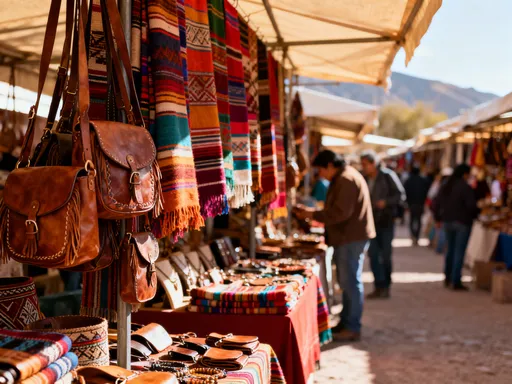
Walking through a local market in Villedieu-les-Poêles on a Saturday morning, you’ll see baskets overflowing with wrinkled pink apples, wheels of cheese wrapped in paper, and jars of honey still flecked with pollen. Vendors greet each other by name, and shoppers ask not about price, but about provenance. “Is this from your own cows?” a woman might ask, holding a wedge of cheese. “Did you press the cider yourself?” These questions matter. They reflect a culture where trust is built not through branding, but through familiarity and integrity.
For the visiting food lover, this authenticity is transformative. It invites a slower kind of travel—one that values connection over convenience. You won’t find chain restaurants or frozen meals here. Instead, you’ll find meals built around what the land offers that week: a chicken raised in the backyard, potatoes dug from a neighbor’s garden, cream so thick it holds its shape on a spoon. This is not rustic out of necessity, but by choice—a quiet resistance to the industrialization of taste.
The Magic of Camembert: From Pasture to Plate
No symbol captures the soul of rural Normandy quite like Camembert. While most people recognize the name, few have tasted the true version—the farm-made Camembert de Normandie, protected by AOC (Appellation d’Origine Contrôlée) status since 1983. This means only cheese produced in a defined region, using raw milk from Normande cows, and aged under strict conditions can bear the name. And even among those, the difference between factory-made and farm-made is nothing short of revelatory.
In the village of Vimoutiers, often called the heart of Camembert country, small producers still follow the original method. At Domaine de la Touche, a family-run farm just outside town, the process begins at dawn. The Normande cows—rust-colored with gentle eyes—are milked by hand or with gentle automated systems that mimic natural rhythms. The milk is transferred to copper vats, where it is gently coagulated with natural rennet. The curds are ladled by hand into round molds, turned daily, and left to develop their signature bloomy rind over two to three weeks.
The result is a cheese that breathes. A ripe Camembert from the farm should yield slightly under pressure, like a ripe peach. When cut, it oozes—a river of ivory paste that coats the tongue with a flavor both earthy and sweet. There’s a hint of mushrooms, a whisper of grass, and a finish that lingers like a memory. This is not the dry, chalky wedge found in supermarkets. This is alive.
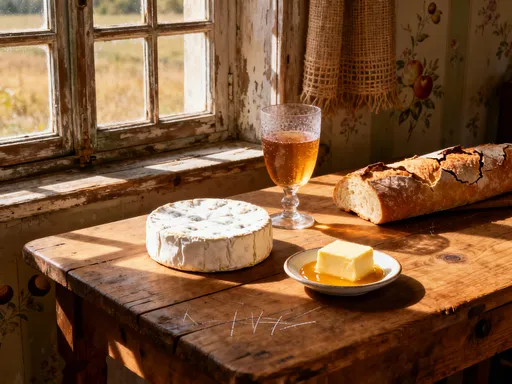
Many farms welcome visitors for guided tours and tastings. At Ferme Saint-Léonard, guests walk through the aging cellar, where hundreds of wheels rest on wooden shelves, dusted with white mold. The air is cool and damp, carrying the scent of damp earth and fermentation. Tasting is done at a long wooden table, accompanied by a glass of dry cider and a piece of sourdough bread baked that morning. There’s no rush. No scripted speech. Just the quiet pride of a family sharing what they’ve nurtured.
Apples, Cider, and Calvados: A Spirited Tradition
If Camembert is Normandy’s soul, then apples are its heartbeat. Over 400 varieties grow across the region, each with a purpose—some for eating, others for cider, and many for distillation into calvados, the region’s famed apple brandy. The orchards are not manicured rows of uniform trees, but wild, gnarled specimens that stretch across hillsides, some over a century old. These are not orchards for show—they are working landscapes, where trees are pruned by hand and apples are harvested in October and November, when the first frost sweetens the fruit.
At a traditional ciderie like Cidrerie Durand in the Pays d’Auge, the autumn harvest is a community affair. Families and neighbors gather to shake the trees, collect the fallen fruit, and carry crates to the pressing house. The apples are washed, ground into pulp, and then pressed between wooden boards to extract the juice. This juice—cloudy and golden—ferments naturally in large oak vats for several weeks, transforming into cider. The result is a drink that bubbles gently, with notes of pear, honey, and wild yeast. Brut cider, the driest version, pairs perfectly with oysters or sharp cheese. Doux, the sweeter kind, is often enjoyed as a dessert drink.
But the story doesn’t end with cider. Some of it is distilled into calvados, a spirit aged in oak barrels for years—sometimes decades. At Domaine Dupont, a fifth-generation estate, visitors can taste calvados from different vintages, each with its own character. A 10-year-old calvados has the warmth of baked apple and cinnamon, while a 25-year-old version carries notes of leather, dried fig, and smoke. These are not shots to be downed, but sipped slowly, like fine wine.
Many cideries offer guided tastings by appointment, often hosted by the owner or a family member. These are not commercial tours but intimate experiences, where questions are welcomed and stories are shared. You might learn how the age of the trees affects flavor, or why calvados from clay soil tastes different than from limestone. It’s education wrapped in hospitality—a reminder that tradition is not static, but lived and evolving.
Butter, Cream, and the Art of French Baking
In Normandy, dairy is not just an ingredient—it’s a cornerstone of identity. The region’s high-butterfat cream and butter are so prized that they’ve earned Protected Designation of Origin (PDO) status. Beurre d’Isigny, named after the coastal town, is especially renowned for its pale gold color, delicate saltiness, and velvety texture. Made from cream that’s been cultured slowly, it carries a subtle tang that elevates everything from toast to sauces.
At a morning market in Bayeux, a butter vendor might slice a fresh block with a wire cutter, handing out samples on parchment paper. One taste and you understand—this is not the butter from the supermarket fridge. It’s richer, deeper, with a flavor that unfolds slowly. When melted, it doesn’t just coat food—it transforms it. A simple potato boiled in salted water becomes a revelation when tossed with a knob of Isigny butter and chopped chives.
Normandy’s cream, often labeled crème fraîche, is equally extraordinary. Thicker and less acidic than its American counterpart, it’s used in classic dishes like sole meunière and chicken Normande. In home kitchens, it finds its way into desserts like flaugnarde—a baked custard studded with apples or pears—or tarte normande, a buttery tart filled with fruit and a custard made from eggs, sugar, and cream. These are not fancy pastries, but humble, honest desserts that celebrate what the region produces.
Bakeries across the countryside still make these treats daily. At Boulangerie Le Fournil in Vire, the oven fires up at 4 a.m., filling the street with the scent of baking bread and caramelizing fruit. By 7 a.m., shelves are lined with galettes, pain d’épices, and slices of tarte normande dusted with powdered sugar. Locals stop in with cloth bags, buying enough for breakfast and perhaps a midday treat. There’s no plastic wrap, no display lights—just warmth, simplicity, and flavor that speaks for itself.
Seafood Fresh from the Coast: From Fécamp to Granville
While the inland farms produce dairy and cheese, Normandy’s coastline delivers some of its most prized ingredients. From the cliffs of Étretat to the tidal flats near Cancale, small fishing villages sustain a tradition of hyper-local seafood harvesting. At dawn, boats return with crates of oysters, mussels, sole, and scallops, often landing at the same docks where they’ll be sold and shucked within hours.
In Cancale, known as the oyster capital of France, the experience is both sensory and social. At a waterside huitrerie, oysters are opened on the spot, their shells pried apart with a sharp knife. The meat is cool, briny, and slightly sweet—best eaten with a squeeze of lemon and a glass of dry cider. Locals know which beds produce the creamiest oysters (those from the Bay of Mont-Saint-Michel are especially prized) and which months yield the plumpest mussels.
One of Normandy’s most beloved seafood dishes is moules à la crème—a twist on the classic moules marinière. Here, the mussels are steamed not in white wine, but in a sauce of cider, shallots, and crème fraîche. The result is rich, velvety, and deeply comforting—a perfect match for a crusty baguette. It’s the kind of dish that appears on family tables on rainy Sundays, not just in restaurants.
Sustainability is woven into this tradition. Fishermen follow seasonal cycles, avoiding overharvesting. Oyster farmers rotate beds to allow recovery. And because most seafood is sold locally, the carbon footprint is minimal. For the conscious traveler, this is food that feels good not just in the mouth, but in the heart.
Farm Stays and Table d’Hôtes: Eating Like Family
One of the most profound ways to experience Normandy’s food culture is through a stay at a gîte rural or chambre d’hôte that offers table d’hôte—a shared home-cooked meal with the hosts. These are not restaurants, but private homes where families open their tables to guests, often using ingredients harvested that day.
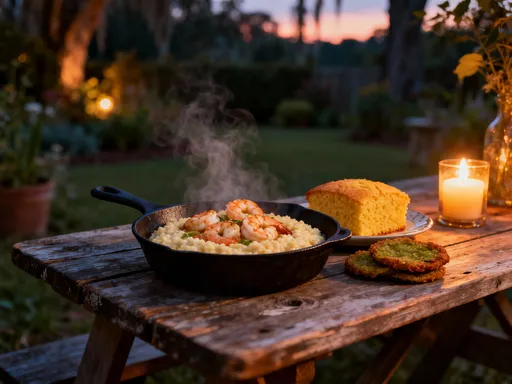
At La Ferme des Vergers, a working apple and dairy farm near Pont-l’Évêque, guests are invited to dinner at 7:30 p.m. sharp. The table is set under a pergola, lit by lanterns. The meal begins with a salad of garden greens, followed by a terrine made from pork raised on the farm. Then comes the main course: duck confit with roasted potatoes and green beans, all plated with quiet pride. The cheese course features three farm-made varieties, including a soft goat cheese dusted with ash. Dessert is a flaugnarde, still warm from the oven.
What makes this experience special is not just the food, but the conversation. The host, Madame Leclerc, shares stories of her childhood, of how her father taught her to press cider, of the winter her cows nearly froze. Her son, who now manages the orchard, explains how they’re experimenting with new apple blends. There’s no performance—just hospitality rooted in daily life.
These meals often last two or three hours, not because they’re formal, but because they’re unhurried. Coffee is served with a small glass of calvados. The sky darkens. Someone brings out a guitar. It’s in these moments that travelers truly understand Normandy—not as a destination, but as a way of living. Food is not separate from life; it is life, shared.
How to Plan Your Own Off-the-Beaten-Path Food Journey
Planning a culinary journey through rural Normandy requires a shift in mindset. This is not a place for fast itineraries or打卡-style tourism. To truly experience its food culture, you must slow down, dig in, and engage. The first step is practical: rent a car. Public transportation in the countryside is limited, and the best farms, cideries, and markets are often a short drive from major towns.
Start by mapping out a route through the Pays d’Auge, the heart of Normandy’s dairy and apple country. Include stops in towns like Lisieux, Pont-Audemer, and Beuvron-en-Auge, where half-timbered houses line cobbled streets and local markets thrive. Visit on market day—usually Wednesday or Saturday—when farmers set up stalls with fresh produce, cheese, and charcuterie.
Book tastings and tours in advance. Many small producers operate by appointment only, especially during the off-season. Websites like Normandie Tourism and Terroirs de Normandie list certified farms and artisans open to visitors. Don’t hesitate to call or email—most hosts speak some English and appreciate the effort.
Respect rural etiquette. Arrive on time. Ask before taking photos. Compliment the food, but avoid treating hosts like performers. If you’re invited to a table d’hôte, bring a small gift—a bottle of wine, a box of chocolates, or flowers from the market. And always, always savor your meal. Put your phone away. Taste each bite. Listen to the stories.
Pair your food experiences with gentle activities. Rent bicycles to ride through orchards. Take a walking tour of a historic village. Visit a pottery studio or a blacksmith who still makes tools for farmers. These moments of quiet exploration deepen your connection to the region.
Conclusion: Why Normandy’s Quiet Kitchens Matter
In a world of fast food and mass production, rural Normandy stands as a quiet act of resistance. Its kitchens are not flashy, its farms not automated, its flavors not engineered. Instead, they are the product of time, care, and a deep bond between people and land. Every bite of Camembert, every sip of cider, every spoonful of butter tells a story—one of continuity, pride, and quiet defiance.
Preserving these traditions is about more than taste. It’s about protecting a way of life that values slowness, seasonality, and community. When you choose to visit a family-run dairy, to buy cheese from a farmer’s market, to share a meal with hosts who raise their own food, you’re not just eating—you’re participating in something vital.
So slow down. Taste deeply. Ask questions. Let the rhythm of rural Normandy seep into your bones. Because true flavor isn’t found on a menu. It’s grown in fields, aged in cellars, and shared at long wooden tables where strangers become friends over a bottle of calvados and a plate of mussels in cream. This is not just a meal. It’s a legacy. And it’s waiting for you.