Lost in the Pyramids: What I Found at Teotihuacan
Have you ever stood where ancient footsteps once echoed, feeling the weight of history beneath your shoes? Teotihuacan, just outside Mexico City, isn’t just ruins—it’s a living maze of discovery. Climbing the Sun Pyramid wasn’t just physical; it shifted something in me. This journey wasn’t about checking landmarks. It was about connection, surprise, and the quiet power of walking through a civilization that still whispers secrets. In that moment, high above the valley with the wind brushing my face, I realized I wasn’t merely visiting the past—I was being invited into a dialogue across centuries, one that asked not what I knew, but what I was willing to feel.
First Impressions: Arriving at Teotihuacan
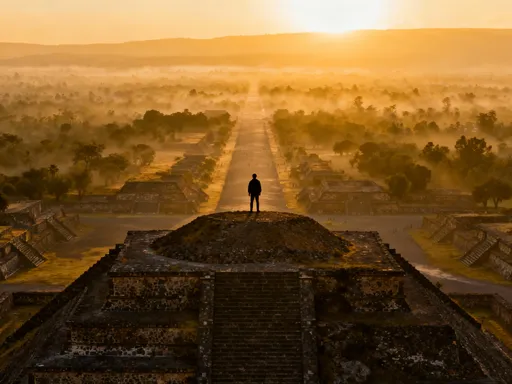
The journey to Teotihuacan begins long before the first pyramid appears. Located about 30 miles northeast of Mexico City, the archaeological zone lies nestled in a broad valley surrounded by dormant volcanoes and rolling hills. Most visitors arrive early in the morning, and for good reason: the rising sun bathes the stone structures in a golden glow, softening their massive forms and lending them an almost ethereal presence. The air is crisp, carrying the faint scent of dry grass and earth warmed by dawn. As the shuttle drops visitors near the entrance, the first sight is the vast expanse of the site—stretching over 12 square miles—and the unmistakable spine of the Avenue of the Dead, leading deep into the heart of the ancient city.
The visitor center, modest but informative, offers maps and context, though no amount of preparation can fully ready one for the scale of what lies ahead. Signs provide historical notes in both Spanish and English, explaining that Teotihuacan flourished between 100 BCE and 650 CE, reaching a population of nearly 125,000 at its peak—making it one of the largest cities in the world at the time. Yet, the identity of its builders remains partly mysterious. Unlike the Maya or Aztecs, whose names and lineages are better recorded, the people of Teotihuacan left no deciphered written language. What they did leave behind, however, speaks volumes: monumental architecture, intricate artwork, and an urban plan so precise it suggests advanced knowledge of astronomy and mathematics.
Walking past the entrance, the silence is striking. Despite the growing number of visitors, the sheer size of the site absorbs sound, creating a meditative hush. The Avenue of the Dead, which runs nearly two miles from the Pyramid of the Moon in the north to the Citadel in the south, feels less like a road and more like a ceremonial corridor suspended in time. To either side, low platforms mark the foundations of homes, temples, and administrative buildings, now reduced to geometric outlines in the earth. Birds call from nearby trees, and in the distance, the murmur of guided tours blends with the rustle of wind through the grass. It is a place where stillness carries meaning, where every step forward is also a step backward—into a world long gone, yet somehow still alive.
The Pyramid of the Sun: A Physical and Emotional Climb
Rising 216 feet above the valley floor, the Pyramid of the Sun is the largest structure at Teotihuacan and one of the most imposing in all of Mesoamerica. Its base covers an area larger than that of the Great Pyramid of Giza, a fact that becomes tangible only when standing at its foot, looking up. The climb begins with a series of wide, uneven stone steps, worn smooth by centuries of weather and, more recently, by the feet of countless visitors. Each step demands attention—some are taller than others, requiring a slight lift of the knee, a careful balance. There is no handrail, no modern assistance; the ascent is as raw and authentic as the site itself.
Halfway up, the effort becomes noticeable. Breathing deepens, muscles tighten, and the temptation to pause grows. But the view, slowly unfolding, is its own reward. Looking back, the Avenue of the Dead stretches southward like a pale ribbon, flanked by the remnants of ancient buildings. To the east and west, the landscape opens into a patchwork of fields and distant hills. Above, the sky widens, and the sense of elevation—both physical and symbolic—begins to take hold. This is not just a climb; it is a progression, a deliberate movement upward that mirrors the spiritual ascents described in Mesoamerican cosmology.
Reaching the summit brings a moment of stillness. The panoramic view is breathtaking: the entire city layout spreads out below, geometric and harmonious, aligned with celestial bodies. The Pyramid of the Moon marks the northern end, while the Citadel—home to the Temple of the Feathered Serpent—anchors the southern. From this height, the precision of Teotihuacan’s design becomes clear. Scholars believe the city was laid out according to astronomical alignments, possibly reflecting the movements of the sun, moon, and Venus. Standing at the top, one cannot help but feel small—not in a discouraging way, but in a humbling recognition of human ingenuity and the vastness of time. The wind here is stronger, cooler, carrying with it a sense of clarity. It is as if the climb has not only elevated the body but also cleared the mind.
Many visitors perform small rituals at the summit—facing the four directions, closing their eyes, taking deep breaths. While these gestures are modern interpretations, they echo the reverence that likely accompanied this space in ancient times. The Pyramid of the Sun was not merely a monument; it was a sacred structure, possibly built over a natural cave believed to be the birthplace of the current world in Mesoamerican belief. To climb it is to engage, however briefly, with that sense of origin and connection. It is a reminder that some journeys are not measured in steps, but in shifts of perspective.
The Pyramid of the Moon: A Quieter Revelation
If the Pyramid of the Sun is a declaration of power and scale, the Pyramid of the Moon is a meditation in symmetry and stillness. Located at the northern end of the Avenue of the Dead, it sits at the base of the Cerro Gordo mountain, which ancient builders may have incorporated into their sacred geography. Though slightly smaller than its southern counterpart, the Pyramid of the Moon holds a different kind of presence—one that feels more intimate, more contemplative. The path leading to it winds gradually upward, flanked by restored platforms and plazas that once hosted ceremonies and gatherings. Fewer visitors make the full journey here, creating a quieter atmosphere, one that encourages reflection.
The climb is less strenuous, but no less meaningful. The steps are well-preserved, and the temple at the top offers a commanding view of the entire avenue, perfectly framed by the surrounding mountains. From this vantage point, the Avenue of the Dead appears as a straight, deliberate line—its name given by the Aztecs centuries after Teotihuacan’s fall, who believed it led to the tombs of giants. In reality, it was likely a ceremonial pathway, used for processions, festivals, and religious rites. Standing at the Pyramid of the Moon, one can almost imagine the sound of drums, the rustle of ceremonial garments, the presence of priests and dignitaries moving in solemn formation.
What is most striking here is the sense of balance. The pyramid’s design emphasizes symmetry, with platforms extending to the east and west in mirror-like fashion. Archaeologists have discovered burial offerings and sacrificial remains in this area, suggesting it was a site of significant ritual importance. Unlike the Sun Pyramid, which draws attention through sheer size, the Moon Pyramid commands respect through its harmony with the landscape. It does not dominate the horizon; it belongs to it. This integration—between architecture and nature, between human creation and the divine—was central to Teotihuacan’s worldview.
Visitors who take the time to sit and simply observe often report a sense of calm, even stillness, that is rare in modern travel. There are no loudspeakers, no crowds pressing forward, no rush to the next photo opportunity. Instead, there is space—space to breathe, to think, to feel. The Pyramid of the Moon does not shout; it whispers. And in that whisper, there is wisdom: that not all greatness is loud, and not all power is measured in height.
The Temple of the Feathered Serpent: Uncovering Symbolism
Near the southern end of the Avenue of the Dead lies one of Teotihuacan’s most artistically significant structures: the Temple of the Feathered Serpent, also known as the Temple of Quetzalcoatl. Unlike the massive, stepped pyramids, this temple is smaller but exquisitely detailed. Its façade is adorned with alternating heads—some representing the feathered serpent deity, others depicting a more aquatic creature, possibly a form of Tlaloc, the rain god. The craftsmanship is remarkable: each stone carving is precise, the feathers and scales rendered with intricate care. These are not crude symbols; they are sophisticated expressions of belief, carved by artisans who understood both technique and theology.
The feathered serpent, known later as Quetzalcoatl among the Aztecs, was a major deity in Mesoamerican religion, associated with wind, learning, and the morning star. At Teotihuacan, the symbol appears over 300 times on this single temple, suggesting its central importance. Scholars believe the temple may have served as a religious and political center, possibly linked to the ruling elite. Excavations beneath the structure have revealed tunnels and chambers, some containing offerings of jade, shells, and ceremonial objects. One of the most significant discoveries was a network of underground passages, possibly representing the underworld—a concept deeply embedded in Mesoamerican cosmology.
What remains unclear is the exact role of the temple in daily life. Was it a place of public worship? A site for elite rituals? A symbolic representation of cosmic order? The answers are incomplete, as much of Teotihuacan’s history was lost when the city was abandoned, possibly due to internal unrest or environmental strain. No written records survive from the city’s peak, so interpretation relies on archaeology, comparative studies, and the later traditions of neighboring cultures. Yet even in the absence of definitive answers, the temple speaks. Its carvings are not merely decorative; they are a language of belief, a visual narrative of a people who saw the divine in nature, in cycles, in the movement of the stars.
Modern visitors often pause here longer than at other sites, drawn by the artistry and the aura of mystery. Parents point out the serpent heads to children, guides explain the symbolism, and photographers capture the play of light on the stone. But beyond the surface, there is a deeper resonance: the recognition that spirituality, in its many forms, has always sought expression through beauty and order. The Temple of the Feathered Serpent is not just a relic; it is a testament to the human need to understand, to honor, and to create meaning.
Walking the Avenue of the Dead: Where Past and Present Meet
To walk the full length of the Avenue of the Dead is to move through time. Stretching nearly two miles from the Pyramid of the Moon to the Citadel, it serves as the central axis of Teotihuacan, both physically and symbolically. Today, it is a wide, flat path, flanked by grassy areas and low stone platforms. But in its heyday, it would have been a vibrant thoroughfare, lined with temples, markets, and residences of the elite. The name itself—given by the Aztecs, who discovered the ruins centuries after the city’s decline—suggests a solemn, funerary character. Yet evidence indicates it was anything but dead. It was, in fact, the lifeblood of the city.
As one walks southward from the Pyramid of the Moon, the landscape gradually changes. The air feels different—warmer, busier. The platforms grow more numerous, their foundations forming geometric patterns in the earth. Some have been partially reconstructed, giving a sense of the original height and design. Along the way, signs identify the remains of various compounds: the Palace of the Butterflies, the Palace of the Jaguars, the Street of the Dead Complex. These were not merely homes; they were centers of administration, art, and ritual. Wall fragments show traces of vibrant murals—depicting deities, processions, and natural scenes—now protected under shaded shelters.
Walking this path invites imagination. One can picture priests in elaborate headdresses moving in procession, merchants calling out from temporary stalls, children playing near open courtyards. The city was multicultural, with evidence of communities from Oaxaca, the Gulf Coast, and the Maya region. This diversity is reflected in the artifacts found here—pottery styles, clothing fragments, linguistic markers—suggesting a cosmopolitan center of trade and ideas. The Avenue of the Dead was not just a road; it was a connector of people, beliefs, and worlds.
Today, it connects past and present. Families stroll together, students sketch in notebooks, couples sit on benches sharing snacks. The silence of the morning gives way to the gentle hum of conversation and laughter. Yet the ancient energy lingers. There is a sense of continuity, as if the footsteps of today are echoes of those from two thousand years ago. To walk this avenue is to participate—not as a tourist, but as a witness to endurance, to the persistence of human aspiration across time.
Beyond the Monuments: Local Vendors, Art, and Authentic Encounters
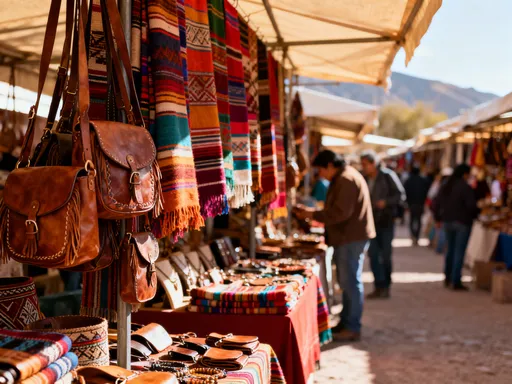
While the pyramids and temples are the heart of Teotihuacan, the soul of the visit often lies beyond the archaeological zone. Along the access roads and near the entrance, local vendors set up colorful stalls offering handmade crafts, textiles, and traditional foods. These are not mass-produced souvenirs; they are expressions of living culture. Clay figurines, inspired by ancient designs, sit beside woven bags and beaded jewelry. Some artisans explain their work with quiet pride, noting that their families have lived in the region for generations. Their presence is a reminder that Teotihuacan is not just a relic of the past—it is part of a continuing story.
Food vendors offer a taste of regional cuisine. Tlacoyos—oval-shaped masa cakes filled with beans, cheese, or fava beans—are grilled over open flames and topped with nopales (cactus), salsa, and crumbled cheese. Atole, a warm corn-based drink often flavored with cinnamon or chocolate, is served in clay cups, its comforting warmth a welcome contrast to the morning chill. These dishes, rooted in pre-Hispanic traditions, connect modern visitors to the daily life of ancient peoples who also relied on maize, beans, and chili as dietary staples. Eating here is not just sustenance; it is participation in a culinary lineage that spans centuries.
Conversations with local guides add another layer of depth. Many are trained by the National Institute of Anthropology and History, and their knowledge is both accurate and passionate. They speak not just of dates and measurements, but of meaning—how the city was designed to reflect the cosmos, how rituals honored the cycles of nature, how community and spirituality were intertwined. Some share personal stories: growing up near the site, watching tourists come and go, feeling a sense of responsibility to preserve their heritage. These interactions transform the visit from a passive viewing into an active engagement.
In these moments, the boundary between observer and participant blurs. One does not simply see Teotihuacan; one experiences it through scent, taste, sound, and dialogue. The ancient and the modern coexist, not in conflict, but in conversation. This is what thoughtful travel looks like—not just capturing images, but building understanding, not just walking through history, but listening to its echoes in the present.
Why Teotihuacan Stays With You: Reflection and Return
Teotihuacan does not let go easily. Long after the visit ends, images linger: the first glimpse of the pyramids in morning light, the effort of the climb, the silence at the summit, the intricate carvings of the feathered serpent. But more than visuals, it is the feeling that remains—the sense of connection to something vast and ancient, yet deeply human. This site does not impress merely through size or age; it moves through resonance. It asks visitors to slow down, to listen, to consider their place in the continuum of time.
What makes Teotihuacan enduring is not just its ruins, but its questions. Who were the people who built this? What did they believe? Why did they leave? These mysteries are not flaws in the experience—they are its essence. They remind us that history is not a closed book, but an ongoing inquiry. They inspire humility, curiosity, and a respect for cultures whose knowledge and values may differ from our own, yet whose aspirations—for meaning, for beauty, for connection—are universally recognizable.
For the thoughtful traveler, Teotihuacan offers more than a destination; it offers a transformation. It challenges the notion that travel is only about leisure or novelty. Instead, it suggests that journeys can be acts of reflection, that places can teach, and that silence can be more eloquent than speech. The pyramids do not speak in words, but in presence, in alignment, in endurance. They stand not to be conquered, but to be contemplated.
And so, the invitation remains: to return not just to Teotihuacan, but to the practice of mindful travel. To go beyond the photo, beyond the checklist, and into the space where wonder begins. To walk slowly, listen closely, and allow ancient places to speak. Because sometimes, in the stillness of a forgotten city, we find what we did not know we were seeking—not answers, but a deeper question, and the courage to keep searching.